By Lanre Olagunju.

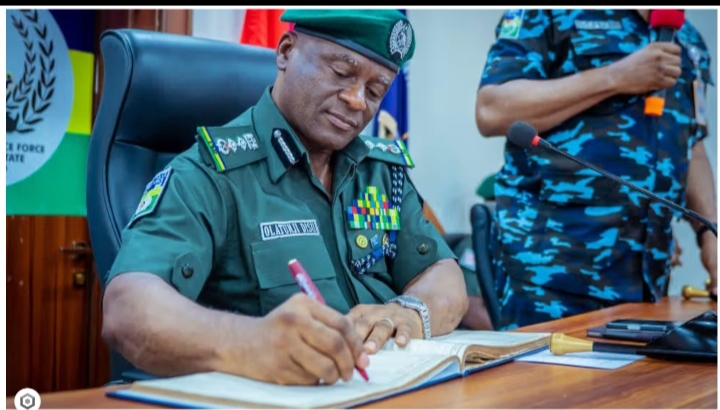
A new operational approach under the leadership of Olatunji Disu is reshaping policing in Nigeria, with greater emphasis on inter-state collaboration, intelligence sharing and visible leadership to tackle insecurity.
Recent security operations across the country have highlighted a shift from isolated policing to coordinated efforts among police commands. One notable example was a joint security operation in the Paze-Byazhin forests on the outskirts of Abuja, where the Commissioner of Police for the Federal Capital Territory, Ahmed Muhammed Sanusi, personally led officers in dismantling kidnappers’ camps.
The operation resulted in the arrest of suspects, the rescue of kidnapped victims and the destruction of criminal hideouts. Observers say the CP’s presence on the frontline demonstrated a leadership style that boosts morale and reinforces teamwork among officers.
A similar approach is evident in the recently launched Operation Kosaye by the Lagos and Ogun State Police Commands. The initiative, which has recorded multiple arrests, the rescue of kidnapped victims and the recovery of weapons, reflects growing efforts by police commands to prevent criminals from exploiting state boundaries.
In the South-South, the Rivers and Akwa Ibom State Police Commands have also strengthened joint patrols, intelligence sharing and coordinated operations along their shared border to combat cross-border criminal activities.
Security analysts say these initiatives point to an emerging policing strategy anchored on visible leadership, intelligence-led operations, inter-state collaboration and healthy competition among police commands.
The strategy is increasingly being associated with IGP. Disu’s leadership, with Commissioners of Police encouraged to work beyond their jurisdictions in tackling organised crime.
However, the reform drive has also attracted public scrutiny. Recent reports from Rivers State sparked debate after allegations that some officers were subjected to undignified treatment during an inspection over appearance standards, despite claims that some affected personnel had underlying medical conditions. The incident has renewed calls for police discipline to be balanced with respect for officers’ dignity and welfare.
Analysts argue that while operational discipline remains critical, effective leadership must also inspire confidence and professionalism among personnel.
They also advocate extending collaborative policing to Divisional Police Officers and Area Commanders through regular intelligence-sharing meetings, joint operations and coordinated crime prevention strategies.
According to observers, strengthening cooperation at every level of the Nigeria Police Force could significantly improve responses to kidnapping, armed robbery and other organised crimes that often cut across administrative boundaries.
They maintain that although improved welfare, training, equipment and technology remain essential for police reforms, institutionalising collaboration could become one of the most significant changes in the Force’s operational culture in recent years.
Lanre Olagunju is a Public Affairs Analyst.