By Ochiagha Reagan Ufomba
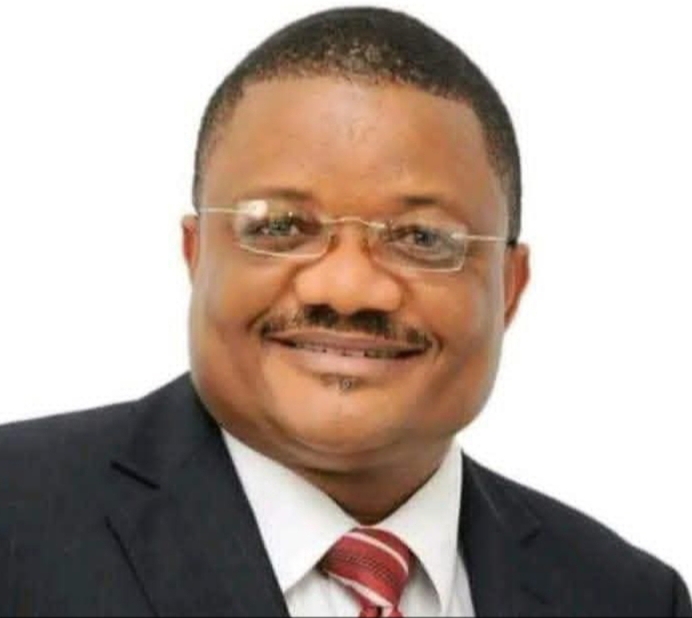
Being excerpts from The Whole Truth, Chapter Seventeen
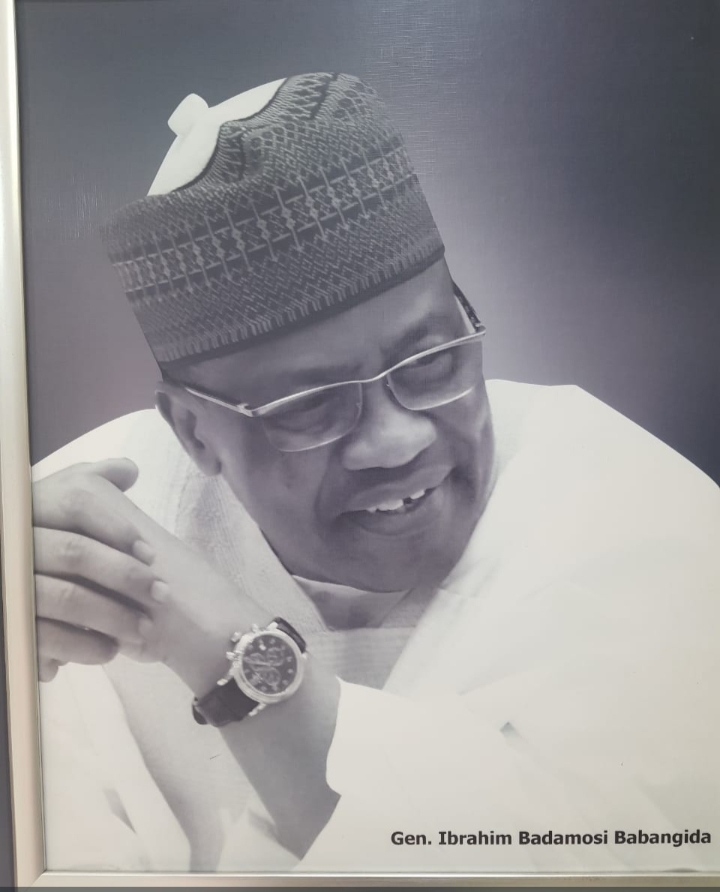
One man who has always fascinated me in Nigerian politics is General Ibrahim Badamasi Babangida (IBB). His bravery, charisma, intellect, and strategic brilliance have made him one of the most enigmatic figures in Nigerian history.
In 2001, I went to work with IBB in his bid for a presidential comeback. I was appointed Chairman of The Nigerian Project (TNP), South-East Region, where I coordinated and harmonised more than 250 IBB campaign groups across the country. The work was intense, but my experience in political organisation made it a fulfilling challenge.
One of my greatest achievements during that period was hosting a national convention at the Concord Hotel, Owerri, in 2005, which brought together some of Nigeria’s most influential political players and retired military officers. The security report must have found its way to the Villa, I suppose, because I was subsequently invited to work for President Olusegun Obasanjo’s abortive Third Term Agenda.
During that period, I was invited to the Villa and approached with offers to support the Third Term project. The incentives were enormous—positions, financial benefits, and influence at the highest levels of government. But I refused. My loyalty to IBB was 100 percent. I chose loyalty over political opportunism, and that, in Nigerian politics, is uncommon.
General Ibrahim Badamasi Babangida is, to me, a warrior, reformer, and visionary leader—a legendary figure in Nigerian history, renowned for his bravery, intellect, political dexterity, and transformative leadership.
From his fearless confrontation with Lt. Col. Buka Suka Musa Dimka during the 1976 coup to his economic and political reforms as Nigeria’s Head of State, I need not add much. IBB has left an indelible mark on my mind and on Nigeria’s governance, economy, and foreign policy.
His legacy remains deeply debated, but it is inseparable from his bold decision-making, military brilliance, political sophistication, and foresight in shaping Nigeria’s future.
The heroic disarmament of Dimka alone remains, in my view, a defining moment of courage. His role in neutralising Lt. Col. Buka Suka Musa Dimka, the mastermind behind the February 13, 1976 coup that assassinated General Murtala Mohammed, was an extraordinary demonstration of bravery, patriotism and love of a nation.
As Chairman of The Nigerian Project, South-East Zone, I had—and still have—regular access to the IBB Hilltop Mansion in Minna, sometimes in search of truth, and at other times in search of wisdom and clarity on key national questions.
I was also a member of a strategy committee headed by General David Jemibewon. We met regularly in Minna. At the time, there was almost a national consensus among those of us involved that Nigeria needed IBB back in power to steer the country away from the vicious quagmire in which it found itself.
A Morning in Minna
One morning in Minna, I found myself in an intimate and reflective moment with General Ibrahim Badamasi Babangida in his expansive dining room—a space as serene as it was commanding.
I had gone to invite him to commission the Ngwa Women Hospital, which I had rehabilitated. It was not my first encounter with the General, but it proved to be one of the most revealing.
I went armed with designer typing sheets, envelopes, a long list of his friends, and a draft letter. He took the items from me, looked at them, turned to me, and asked:
“Were you a perm sec? This is how they do their thing.”
I responded:
“No, sir, but you know I am a trained Secretary. A bloody civilian, sir.”
“No wonder,” he thundered.
We both burst into laughter.
That brief exchange captured something quintessentially IBB—the sharp observation, the humour, the ability to disarm you with a simple question, and the warmth beneath the imposing persona.
Who Killed Dele Giwa?
Two other moments from that engagement stand out distinctly.
The first was deeply personal. I took him on regarding three thorny issues that had dominated national discourse for decades: the death of Dele Giwa, the alleged mismanagement of the Gulf War oil windfall, and the annulment of the June 12 election.
On Dele Giwa, his response was calm, measured, and, to my mind, compelling. He insisted that the common narrative surrounding the assassination was false. To support his position, he directed me to Brigadier General A. K. Togun, who, according to him, had conducted a thorough investigation into the matter.
True to his word, Togun received me warmly and handed me a book containing the details of that investigation. Brigadier Togun, then Lt. Col., was Deputy Director of the Directorate of Military Intelligence (DMI) at the time.
That encounter opened a new perspective for me—one less coloured by media sensationalism and more informed by documents and firsthand testimony.
For the incurable cynics who may doubt the account, nothing could be more instructive than the testimony of Yakubu Mohammed, a founding member of Newswatch magazine, who at the time had travelled with the late Dele Giwa to London, purportedly to interview Gloria Okon.
He discounted the allegation that Dele Giwa travelled to London to interview Gloria Okon or that Newswatch magazine was conducting an investigation into the matter. In his words:
“To start with, I know, for a fact, that Newswatch was not planning to do any story on Gloria Okon…”
My submission is simple: if Newswatch was not planning such a story, as Yakubu Mohammed revealed, then the argument that Dele Giwa was killed because he was preparing to publish a story about Gloria Okon becomes difficult to sustain.
The fact that the bomb was delivered in an official-looking presidential envelope has also remained a striking feature of the case. Whoever planted the bomb, one would expect, would have understood that leaving such an obvious trail could direct suspicion towards the Presidency.
There was, perhaps, another lead that deserved greater attention: the history surrounding the departure of Dele Giwa, Dan Agbese, and Yakubu Mohammed from Concord Newspapers and their acrimonious separation from Chief Moshood Abiola, the publisher, before they established Newswatch magazine.
Did that rupture produce bad blood? Was someone hurt? Was there a motive that investigators failed to pursue adequately?
Perhaps it was a missed opportunity.
The Gulf War Oil Windfall and the $12.4 Billion Question
On the matter of the Gulf War windfall, IBB advised me to seek further details from Clement Ebri, the former Governor of Cross River State.
Ebri, like a diligent archivist, provided me with three books: one on OPEC rules and policies, another on Nigeria’s OPEC export quota, and a third on actual crude production statistics from the NNPC.
The facts contained in those materials were illuminating. They revealed that Nigeria’s oil earnings during the Gulf War, when assessed against our quota, prevailing prices, and actual production, did not appear to support the colossal figures often cited as “missing.”
The distinction he made was critical: what was in contention, if anything, was more a question of misapplication than outright embezzlement.
When Iraq invaded Kuwait in August 1990, it triggered a global oil crisis. More than 4.5 million barrels per day were removed from the international market. As prices soared, OPEC reallocated export quotas among member nations, including Nigeria, to help stabilise global supply.
Nigeria’s OPEC Export Quota During the War
- Pre-Gulf War quota (1990): approximately 1.5 million barrels per day
- Adjusted wartime quota: approximately 1.88 million barrels per day
This quota, rather than Nigeria’s entire domestic production capacity, formed the basis of official crude export sales during the period.
Crude Oil Prices During the Gulf Crisis
Period| Average Crude Price
Pre-war| $15–$18 per barrel
Peak crisis (Aug.–Oct.)| $30–$41 per barrel
War phase (Jan.–Feb.)| $25–$30 per barrel
Post-war| $18–$20 per barrel
The estimated average export price during the windfall period was approximately $25–$28 per barrel.
Nigeria’s Estimated Oil Windfall Revenue, 1990–1991
Using an estimated quota of 1.88 million barrels per day over approximately six months:
- Total barrels exported: approximately 338 million barrels
- At $25 per barrel: approximately $8.4 billion
- At $28 per barrel: approximately $9.5 billion
Thus, the estimated windfall was approximately $8.4–$9.5 billion, based on those assumptions.
The Okigbo Panel and the $12.4 Billion
In 1994, the Okigbo Panel, led by Dr. Pius Okigbo, investigated Nigeria’s foreign oil earnings between 1988 and 1994.
The panel’s findings concerning the oft-cited $12.4 billion figure have been the subject of considerable public debate. The figure covered a six-year period, not merely the Gulf War years of 1990–1991, and involved funds held in what were described as “Dedicated Accounts” operated through the Central Bank of Nigeria.
The significance of this distinction cannot be overstated.
The $12.4 billion figure should not simply be presented as money that disappeared during the Gulf War. It covered a much broader period and a wider set of transactions.
These encounters revealed to me not merely the complexity of governance, but also the tragedy of unverified assumptions.
In the court of public opinion, verdicts are often delivered without the full weight of evidence.
But in that quiet dining room in Minna, I saw a man burdened by decisions, misjudged by history, yet unbending in his own version of the truth.
Some truths, I learned, are buried not for lack of evidence, but for lack of patience to search.
Perception is not always reality.
The Humane Side of IBB
Much has been written about General Ibrahim Badamasi Babangida—his military brilliance, political dexterity, economic vision, and controversial decisions.
But very little is said about the man behind the medals.
I have come to know that beneath the armour of the soldier and strategist lies a deeply humane, affectionate, and surprisingly humorous man.
One striking attribute of IBB is his personal touch. Many may find this difficult to believe, but he is often the first to call me on my birthday—not his aide, not a secretary, but the General himself.
There was a New Year’s Day I will never forget. Early that morning, his voice came through my phone, warm and mischievous:
“I won’t wait for your village people to beat me to it—Happy New Year!”
That combination of humour and fatherliness is classic IBB.
And it was not a rare occurrence. To this day, General Babangida calls me at least once every month.
These are not obligatory calls or perfunctory courtesies. They are genuine conversations—checking on my well-being, offering a word of encouragement, sharing a laugh, and sometimes teasing me.
And this is not unique to me. He does the same for many of his followers, across Nigeria and even abroad.
I have spoken with military officers, politicians, technocrats, journalists, and even some of his critics who testify to his remarkable habit of remembering birthdays, anniversaries, and major life events.
He calls to console. He calls to congratulate. He calls to encourage.
He remembers names. He recalls little details that most people forget.
In a country where leaders often become distant and unreachable, IBB stands apart.
There is a particular softness in him that reveals itself most profoundly during personal loss.
When his beloved wife, Her Excellency Maryam Babangida, passed away, I led a delegation from the South-East to pay our respects. I witnessed the General betray emotion—not the tears of weakness, but those of a man who had truly loved and lost.
The same IBB who had commanded armies, signed decrees, and shaped national destinies wept openly, honestly, and without pretence.
It was one of the most defining moments of my encounters with him.
There, before us, was not the Head of State.
He was a husband in mourning.
People often ask me what keeps me loyal to him.
It is not power.
It is not politics.
It is not money.
It is moments like these—his kindness, his humility in private, his thoughtfulness, and his capacity for human connection.
Through our countless interactions—over politics, over life, and over nation-building—I have come to see a man who never completely lost touch with his roots, his people, or his humanity.
Above all, he taught me to develop a thick skin against cheap gossip, blackmail, backstabbing, and unfaithful friends.
To walk with IBB is to walk with wisdom, tact, and charisma.
He is a man who remembers.
A man who listens.
A man who, despite the heavy burden of history on his shoulders, has chosen to lead not only with authority, but also with heart.
A Salute at 85
Sir, at 85, I stand in salute of your courage, your love for country, your fatherly counsel, and your wisdom to carry on.
Happy 85th birthday, Sir.
May the years ahead bring you peace, strength, good health, and the satisfaction of knowing that your journey through Nigeria’s history continues to inspire generations.
Happy birthday, General Ibrahim Badamasi Babangida, GCFR.
Ochiagha Reagan Ufomba is the author of The Whole Truth, a memoir widely available through Amazon, Barnes & Noble, and Apple Books worldwide.