
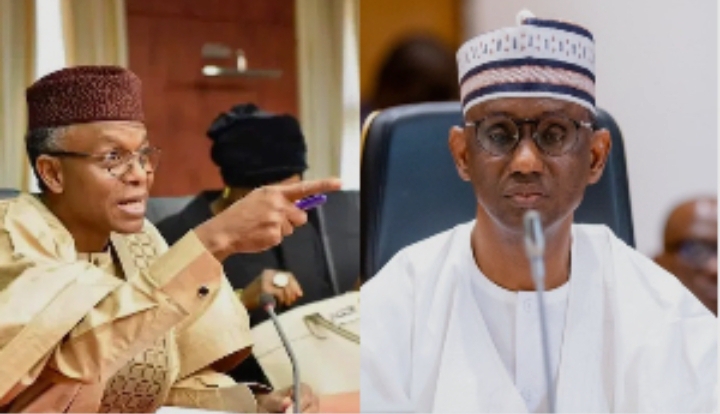
Nigeria’s Department of State Services (DSS) has filed a suit against former Minister of the Federal Capital Territory and former Kaduna State Governor, Nasir El-Rufai, accusing him of unlawfully intercepting the phone communications of the National Security Adviser, Nuhu Ribadu.
In the case filed at the Federal High Court of Nigeria in Abuja, the DSS pointed out that El-Rufai allegedly admitted during an interview on Arise TV’s Prime Time Programme on 13 February 2026 that he and his associates unlawfully intercepted the NSA’s phone communications.
The three counts charge reads as follows:
Count One alleges that El-Rufai personally admitted to unlawfully intercepting the NSA’s phone communications, an offence punishable under Section 12(1) of the Cybercrimes (Prohibition, Prevention, etc.) Amendment Act, 2024.
Count Two claims he knowingly associated with individuals who intercepted the NSA’s communications without reporting them to relevant security agencies, contrary to Section 27(b) of the same Act.
Count Three accuses him and others still at large of using technical equipment to compromise public safety and national security, causing apprehension among Nigerians, in violation of Section 131(2) of the Nigerian Communications Act 2003.
The suit dated 16 February 2026, marks a significant escalation in the ongoing security and political controversy surrounding El-Rufai.
Reports say no date has been fixed for hearing.


Reacting to the development, Human rights Lawyer, Inibehe Effiong, has raised concerns about the charges filed against the former Governor of Kaduna State, Nasir El-Rufai.
Inibehe, in a post via his Facebook page, argued that El-Rufai never admitted to tapping Ribadu’s conversation but referenced someone, stressing that no court will compel him to give evidence against himself.
The Rights Activist further noted that there is no entity known as the Department of State Services (DSS) in Nigerian law.
“Firstly, there is no entity known to law as Department of State Services, DSS, as stated in this charge.
“The National Security Agencies Act only recognizes and creates the State Security Service, SSS.
“Secondly, the said Act does not vest the SSS with prosecutorial powers,” the Activist argued.


