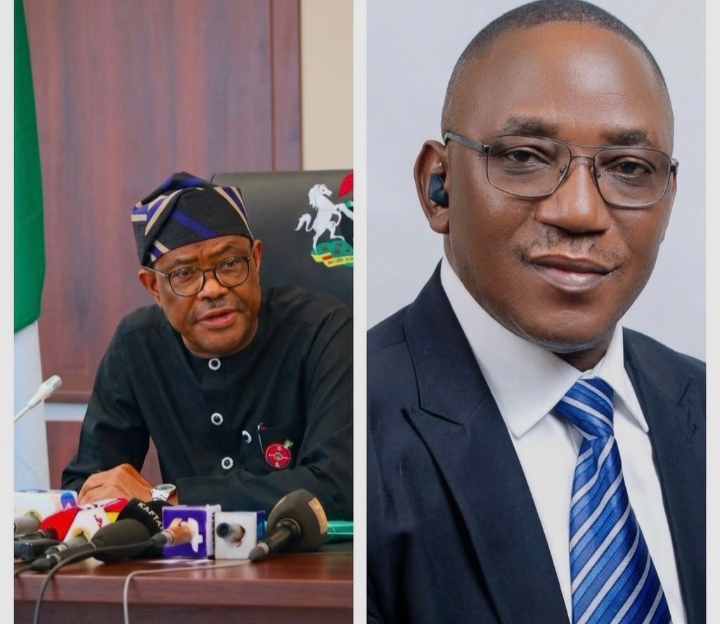
Wike has finally said, in plain English, what many Nigerians have spent years arguing about: they had a strategy in 2023. Where Obi’s votes could hurt Atiku, they let Obi have them. Where Obi’s victory could create a political signal they didn’t want, they stopped him.
His own words: “We did that.” And on Rivers: “We stopped it.”
So let us stop dressing this up as some brilliant political chessboard.
This was a sitting governor openly talking about how political actors deliberately manipulated the distribution of votes to produce a preferred political outcome.
And this is precisely why nothing Wike says shocks me anymore.
He has always understood Nigerian politics as a transaction: power, access, influence and whatever political advantage can be extracted from the system. Today he is explaining the mechanics of yesterday’s election, while sitting comfortably inside the same political establishment.
The real disgrace is not even Wike’s shamelessness.
It is a country where politicians can publicly tell us how they interfered in an election and the national response is mostly: “Ah, Wike has spoken again.”
No investigation. No serious institutional reckoning. No consequences.
Just another headline.
That is how a democracy becomes a playground for people who know there is virtually no price to pay.
And if this is what politicians are comfortable telling Nigerians about 2023 on national television, one question should concern every voter:
What exactly are they planning to do with the lessons they learnt from 2023 in 2027?
Solomon Dalung (Esq) is a former Minister of sports.