By Sam Agogo

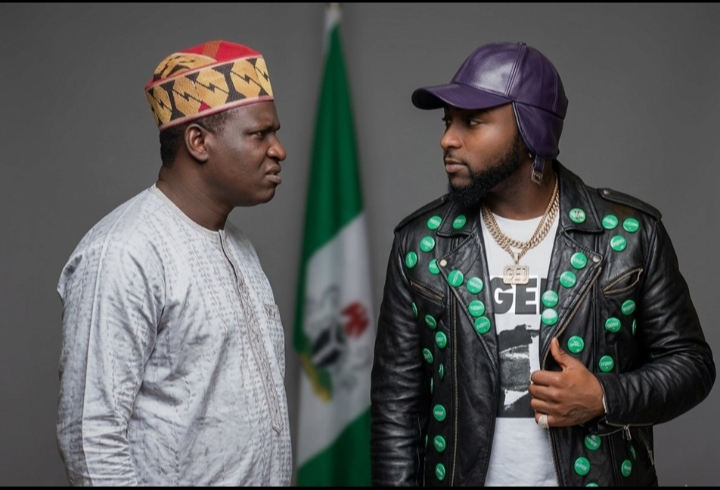
The clash between Hausa praise singer Rarara and Afrobeats superstar Davido over the public display of kidnapped children’s names from Oyo State has become a defining moment in Nigeria’s cultural and political discourse. What began as a disagreement over a musician’s gesture has evolved into a national debate about patriotism, political loyalty, and the role of artists in confronting insecurity.
Davido’s act of wearing a jacket inscribed with “Bring Them Home” and the names of abducted schoolchildren during a global concert was not a trivial stunt. It was a deliberate intervention in Nigeria’s insecurity narrative.
In a country where kidnappings have become routine headlines, Davido chose to use his international platform to remind the world and Nigerians themselves that children are being stolen from classrooms, families are grieving, and the nation is bleeding. This was not mere showmanship; it was patriotism expressed through art.
Patriotism is not about concealing wounds; it is about confronting them so they can heal. Davido’s gesture was a painful but necessary reminder that Nigeria cannot afford to hide its shame.
Rarara’s response, branding Davido “animalistic” and accusing him of politicizing tragedy, exposes the entrenched culture of political praise-singing. For years, musicians closely tied to political structures have composed songs glorifying leaders while communities suffer under the weight of banditry and kidnappings.
His criticism of Davido is less about protecting Nigeria’s dignity and more about defending the political establishment he serves. By framing Davido’s activism as Accord Party propaganda against APC, Rarara reduces a humanitarian cry to partisan rivalry. This is precisely the problem: insecurity has been weaponized, and victims have become pawns in political battles.
It is here that Dr. Mahadi Shehu’s intervention becomes particularly powerful. His words did not merely criticize Rarara; they struck at the very foundation of the culture of silence and sycophancy. Dr. Mahadi recalled a painful episode when Late Rtd. General Rabe, a respected elder from his region, was languishing in the hands of bandits.
At that time, Rarara chose to sing for politicians instead of raising his voice for justice. Mahadi condemned this choice in the harshest terms, describing it as a betrayal of community and conscience. He made it clear that he did not support Rarara’s actions, exposing the moral bankruptcy of prioritizing political loyalty over solidarity with victims.
His conclusion was sharp and uncompromising: if forced to choose, he would rather stand with Davido’s activism than with Rarara’s silence. Mahadi’s words were not gentle rebukes they were a hard indictment of a system where artists abandon their people to curry favour with politicians. His intervention reframed the debate from a celebrity spat into a moral reckoning, challenging Nigerian musicians to decide whether they will remain instruments of political propaganda or become voices for the voiceless.
The broader implication is that Davido’s act represents a new model of Nigerian patriotism. It is global, unapologetic, and activist.
He understands that Nigeria’s image cannot be protected by silence; it can only be redeemed by confronting insecurity head-on. His critics argue that he embarrassed Nigeria before the world, but the truth is that Nigeria’s embarrassment lies not in Davido’s jacket but in the kidnappings themselves. Silence does not erase shame; it compounds it.
This clash also highlights the different ways artists across Nigeria engage with national issues. While some musicians have chosen to align themselves with political structures, others have embraced activism, using their platforms to challenge injustice.
This is not a matter of geography or ethnicity it is a matter of conscience. The real divide is between those who prioritize political loyalty and those who prioritize the voices of victims.
The risks of Davido’s action are real. Publicizing the names of kidnapped children could embolden criminals or complicate rescue efforts. Yet, the greater risk lies in silence. When musicians, leaders, and citizens choose silence, kidnappers thrive in the shadows. Davido’s act dragged the crisis into the light, forcing Nigerians to confront what many would rather ignore. That is patriotism in its rawest form.
Ultimately, the clash between Rarara and Davido is not about music it is about Nigeria’s conscience. Rarara represents the old order of political loyalty, where musicians serve as mouthpieces for power. Davido represents a new order of patriotic activism, where artists use their platforms to amplify the cries of victims. Dr. Mahadi Shehu’s intervention underscores the moral choice before Nigeria: to continue glorifying politicians while communities suffer, or to embrace activism that confronts insecurity.
Davido’s gesture was not perfect, but it was patriotic. It was a reminder that true love for country sometimes means exposing its wounds to the world, not concealing them. Nigeria’s future may well depend on whether more artists choose Davido’s path of activism over Rarara’s path of silence.